


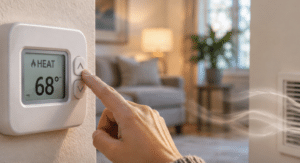



What Las Vegas homeowners should know about that first heater startup of the season.
After months of running the air conditioner through another Las Vegas summer withstanding triple-digit temperatures, the first bit of chilly weather that we get usually provides some much-needed relief for us locals. You switch your thermostat from cooling to heating, enjoy the warm air coming through the vents, and then notice something unexpected.
What’s that burning smell?
If you’ve experienced this, you’re certainly not alone. It’s a common occurrence when heating systems are turned on for the first time after sitting unused for several months.
The good news? A brief, dusty burning smell isn’t necessarily a sign that something is wrong. However, certain odors can indicate a problem that shouldn’t be ignored.
Why Does My Heater Smell Like Burning Dust?
One of the most common explanations is exactly what it sounds like: dust.
During the warmer months, dust can accumulate on heating components that aren’t being used. When the heater is turned on, those components warm up and can burn off the accumulated dust, producing a noticeable odor.
In Southern Nevada, where heating systems may go unused for much of the year, this is especially known, but may surprise new homeowners.
A mild burning-dust smell during the first heating cycle can be normal and should gradually disappear as the dust burns away.
How Long Should the Burning Smell Last?
A typical first-use dust odor should begin fading relatively quickly, often during the first heating cycle.
The exact duration varies depending on the equipment and conditions, so there isn’t a universal time limit that applies to every system.
What’s more important is whether the smell is improving.
If the odor remains strong, continues through repeated heating cycles, or returns regularly, don’t assume it’s just dust. Turn off the heating system and contact a qualified HVAC professional as needed for further evaluation.
When Is a Burning Smell From Your Heater a Problem?
Not every unusual smell is part of normal seasonal operation.
Pay attention to the type of odor and whether other symptoms are present.
Burning plastic or electrical odors: A sharp smell resembling melting plastic, overheated wiring, or electrical components may indicate overheating or another equipment concern. Turn the system off and arrange for professional evaluation.
Rotten eggs or sulfur: Natural gas is treated with an odorant to help people recognize possible leaks. If you suspect a gas leak, leave the building immediately. From a safe location, contact 911 or your gas utility. Do not operate electrical switches or attempt to locate the leak yourself.
Persistent burning odors: A smell that doesn’t fade, becomes stronger, or repeatedly returns should be investigated rather than dismissed as normal.
Visible smoke or signs of fire: If you notice substantial smoke, flames, or other signs of a fire, take emergency measures.
Remember that carbon monoxide is odorless. You cannot rely on your sense of smell to identify a carbon monoxide problem.
What Should Las Vegas Homeowners Check Before Using Their Heater?
As temperatures begin dropping across the Las Vegas Valley, a few simple maintenance steps can help prepare your heating system for the season.
- Check your air filter. A dirty filter can restrict airflow and affect heating performance. Follow your equipment and filter manufacturer’s replacement recommendations.
- Keep vents and equipment areas clear. Avoid blocking supply or return air openings, and maintain the required clearances around heating equipment.
- Test your smoke and carbon monoxide alarms. Make sure they’re working properly and replace batteries or alarms as directed by the manufacturer.
- Schedule routine heating maintenance. Have a qualified HVAC professional service your heating equipment according to the manufacturer’s recommendations. Annual professional maintenance is a widely recommended safety practice, particularly for fuel-burning systems.
If your heating system hasn’t been used in several months, consider testing it before the coldest weather arrives. That gives you an opportunity to identify potential concerns before you depend on it for comfort.
A Little Preparation Goes a Long Way
Las Vegas may be known for its extreme summer heat, but our homes still rely on heating systems when winter temperatures arrive.
That first dusty smell of the season is often temporary and harmless. Knowing which signs are normal and which deserve professional attention can help you make informed decisions about your home’s safety and maintenance.
At Spectrum Inspection Group Inc., we’ve been helping Southern Nevada homeowners better understand their properties since 1998. Whether you’re buying a home, maintaining one, or simply have a question about something you’ve noticed, we’re always happy to be a resource.