



Most of us don’t spend much time thinking about our home’s plumbing, electrical, roofing, or HVAC systems until something goes wrong.
A heater stops working, water pressure suddenly drops, or a mysterious stain appears on the ceiling. Sometimes the problem is relatively simple. Other times, it’s a sign of something that deserves a closer look.
With cooler weather arriving in Las Vegas, now is a good time to get familiar with four of your home’s most important systems and the warning signs you shouldn’t overlook.
1. HVAC: Why Are Some Rooms Warmer Than Others?
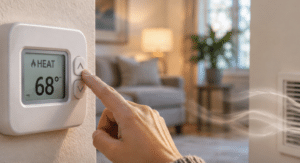
Have you ever noticed that one bedroom feels significantly colder than the rest of the house, even though the heater is running?
Uneven temperatures can have several explanations, including restricted airflow, ductwork concerns, inadequate insulation, improperly oriented Low-E windows, or differences in how rooms receive sunlight.
Another thing worth paying attention to is how your heating system operates. Frequent cycling, unusual noises, or difficulty maintaining the thermostat’s set temperature can indicate a problem that needs further evaluation.
Uneven heating doesn’t automatically mean your furnace needs replacing. A qualified HVAC technician can evaluate the system and help determine whether the issue involves the equipment, airflow, or another contributing factor.
2. Plumbing: What Can Changes in Water Pressure Tell You?
A sudden change in water pressure can be frustrating, especially when you’re not sure what’s causing it.
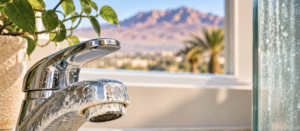
If the pressure is low at just one faucet, the problem may be as simple as a clogged aerator. If several fixtures are affected, possible causes include supply issues, a malfunctioning pressure-reducing valve, or a plumbing leak.
Las Vegas homeowners also deal with hard water, which can contribute to mineral deposits in fixtures and plumbing components over time.
Pay attention to whether the change affects one fixture or the entire home, and whether it occurs with hot water, cold water, or both. Those details can help a licensed plumber narrow down the cause.
3. Electrical: What Is Your Electrical Panel Telling You?
Your electrical panel distributes electricity throughout your home, but most homeowners rarely give it a second thought while everything is working properly.
A breaker that trips occasionally may be responding to an overloaded circuit or another electrical condition. Repeated tripping, however, deserves professional attention.
Other concerns include visible corrosion, damaged wiring, missing panel covers, or evidence of overheating.
It’s also worth understanding that an electrical panel’s age alone doesn’t determine whether it’s safe. Its condition, installation, components, and any known equipment concerns all matter.
Electrical panels should be evaluated by qualified professionals. Never remove the panel cover or attempt to investigate internal wiring yourself.
4. Roofing: Can Your Roof Have Problems Without an Active Leak?
Absolutely. A roof doesn’t have to be actively leaking to show signs of deterioration.
Cracked or displaced tiles, damaged flashing, deteriorated underlayment, and problems around roof penetrations can develop before water damage becomes noticeable inside the home.
Tile roofs are common throughout Southern Nevada, and while the tiles themselves can be durable, the materials beneath them also play an important role in keeping water out.
A roof that looks fine from the street isn’t necessarily free of concerns. If you notice damaged materials or signs of deterioration, a qualified roofing contractor can evaluate the condition and recommend appropriate repairs.
What Is a Four-Point Home Inspection?
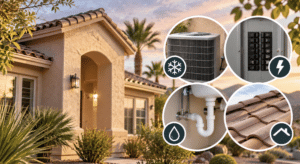
These four systems have something in common: they’re all included in what’s known as a Four-Point Home Inspection.
Many home inspection companies offer this limited service to evaluate the observable condition of four major areas of a property:
- Roofing: Visible roof coverings, flashing, penetrations, and related accessible components.
- Electrical: Accessible panels, wiring, and electrical components.
- HVAC: Accessible heating and cooling equipment and its observable operation, when appropriate.
- Plumbing: Accessible supply and drainage components, fixtures, and water heating equipment.
Unlike a comprehensive home inspection, which covers a much broader range of property components, a Four-Point Inspection focuses specifically on these four systems.
These inspections are sometimes requested for homeowners insurance purposes, depending on the insurer and location. They can also be useful for homeowners who want a limited professional assessment of these major systems.
A Four-Point Inspection is visual and non-invasive. It isn’t intended to replace specialized evaluations, maintenance, or repairs by licensed contractors, and the price is typically a fraction of the cost of a comprehensive home inspection.
Understanding Your Home Is Part of Taking Care of It
You don’t need to be an expert in roofing, plumbing, electrical, or HVAC systems to recognize when something deserves attention.
Understanding a few common warning signs can help you ask better questions, seek the right professional assistance, and make more informed decisions about your property.
At Spectrum Inspection Group Inc., we’ve been helping Las Vegas and Southern Nevada homeowners better understand their homes since 1998. We offer both comprehensive home inspections and limited Four-Point Inspections, and we’re always happy to be a resource in any capacity, even if you just have questions about your property.